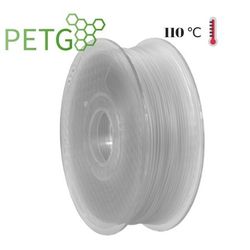
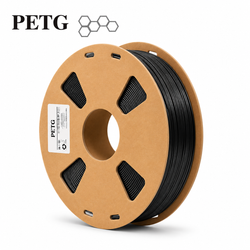
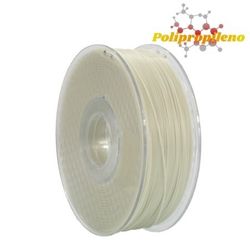
The PETG, polyethylene glycol terephthalate, is ideal for printing parts that are very resistant to breakage and with a very smooth and uniform surface finish.
It provides very resistant printed pieces, with a high adhesion between layers, this means that the printed pieces are much more resistant between layers and the breaks will not occur along a layer, if not along the entire piece.
Resists the attack of different chemical agents
Does not absorb water
Low shrinkage (no warping or breakage between layers)
It is necessary to use a warm bed.
It is necessary to use lacquers for 3D printing
It is a material that we recommend to try without a doubt.
The resistance to temperature varies depending on the design and characteristics of the printed piece.
| Impact resistance | n/a |
|---|
| Recommended printing temperature | 230±10°C |
|---|
| Bending modulus | 2180Mpa |
|---|
| Density | 1.27 g/cm³ (23°C) |
|---|
| Maximum hotbed temperature (°C) | 70°C±10 |
|---|
| Tensile strength | 44.1MPa |
|---|
| Hotbed | Yes |
|---|
| Distortion temperature | 110°C |
|---|
| Elongation at break | 150% |
|---|
| Layer fan | Optional |
|---|
| Bending resistance | 87Mpa |
|---|
| Speed | 40mm/s-120mm/s |
|---|